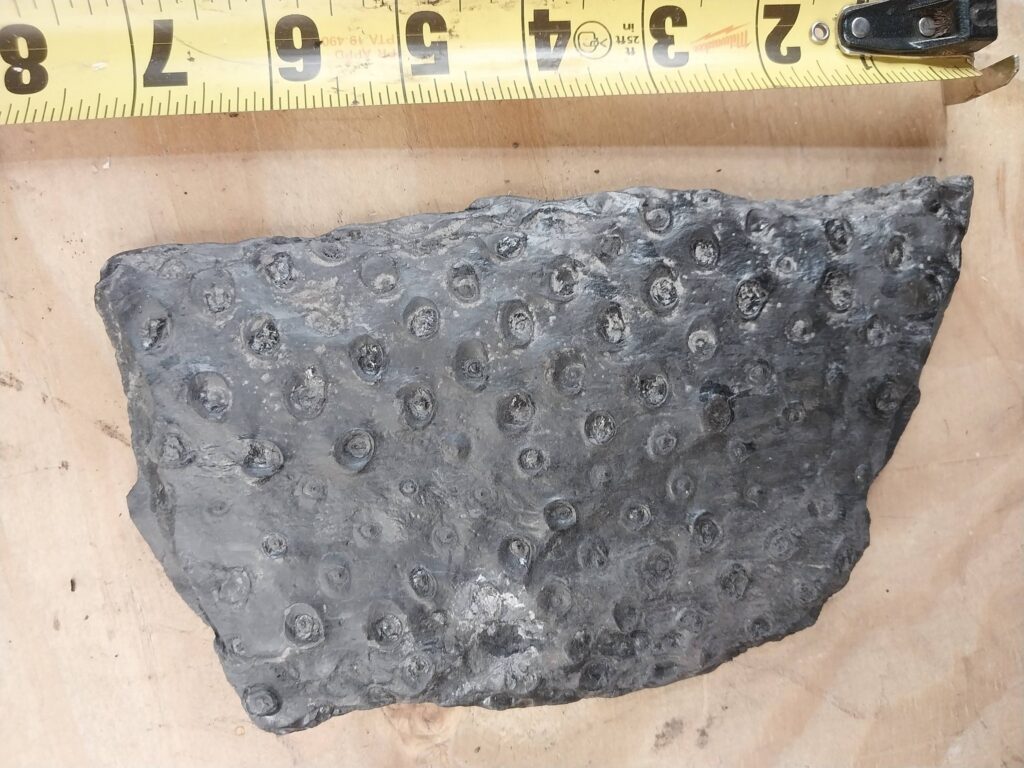
To the casual observer of the ancient earth, the stones beneath our feet speak a silent language, but to the student of truth, they cry out with forensic clarity. Among the most remarkable testimonies left behind in the rock strata are the pristine, casted impressions of Stigmaria—the sprawling root systems of giant, pre-Flood lycopod trees. When we examine these specimens, we are often confronted with a striking characteristic: the rootlet scars are perfectly preserved, distinct, and notably not pitted.
In the natural world, organic material left to the elements obeys the immutable laws of decay. When a plant dies in a stagnant swamp or a damp peat bog, it does not remain immaculate. It rots. Bacteria, fungi, oxygen, and acidic waters immediately begin their destructive work, leaving the surface weathered, degraded, and deeply pitted by decomposition. For a soft, organic structure to leave a three-dimensional impression that is sharp, deep, and completely unmarred by decay, the evolutionary narrative of slow accumulation over vast ages utterly fails.
The phrase “not pitted” is a definitive statement of preservation. It means that the design was caught mid-moment and protected from the ravages of time and rot. For these delicate rootlet hollows to be preserved with such flawless, smooth integrity, the living plant system had to be flash-buried under immense, catastrophic pressure before the first stage of decomposition could even begin.
This physical evidence stands as an uncompromised witness against the uniformitarian philosophy that dominates modern geology. Scripture warns us of those who would willfully ignore the sudden interventions of the Almighty, noting that “there shall come in the last days scoffers, walking after their own lusts, And saying, Where is the promise of his coming? for since the fathers fell asleep, all things continue as they were from the beginning of the creation” (2 Peter 3:3-4). These scoffers assert that the slow, sluggish processes we observe today are the only keys to interpreting the past.
Yet, the stones themselves refuse to lie. A slow, millions-of-years accumulation of sediment would have resulted in completely rotted, unidentifiable, and severely pitted organic remnants. The presence of crisp, un-pitted Stigmaria scars demands an immediate, high-pressure burial by a massive volume of sediment-laden water—the exact conditions of the global Deluge. As the waters of the Flood broke forth, entire ecosystems were torn up and instantaneously sealed within deep layers of mud, freezing the pristine details of God’s creation in stone before decay could mar their surface.
When God keeps these ancient impressions “not pitted,” He leaves a high-resolution fingerprint of His swift judgment on a rebellious world. It is a physical confirmation that His word is reliable, His hand is deliberate, and the historical reality of the Flood is carved unalterably into the bedrock of the earth. We are reminded of the sovereign declaration in the book of Job: “Which counterfeiteth the sky, and treadeth upon the waves of the sea… Which doeth great things past finding out; yea, and wonders without number” (Job 9:8,10). The un-pitted stone stands as one of those undeniable wonders—a silent but powerful monument to a catastrophic past and a reminder that the Word of God stands fast forever.